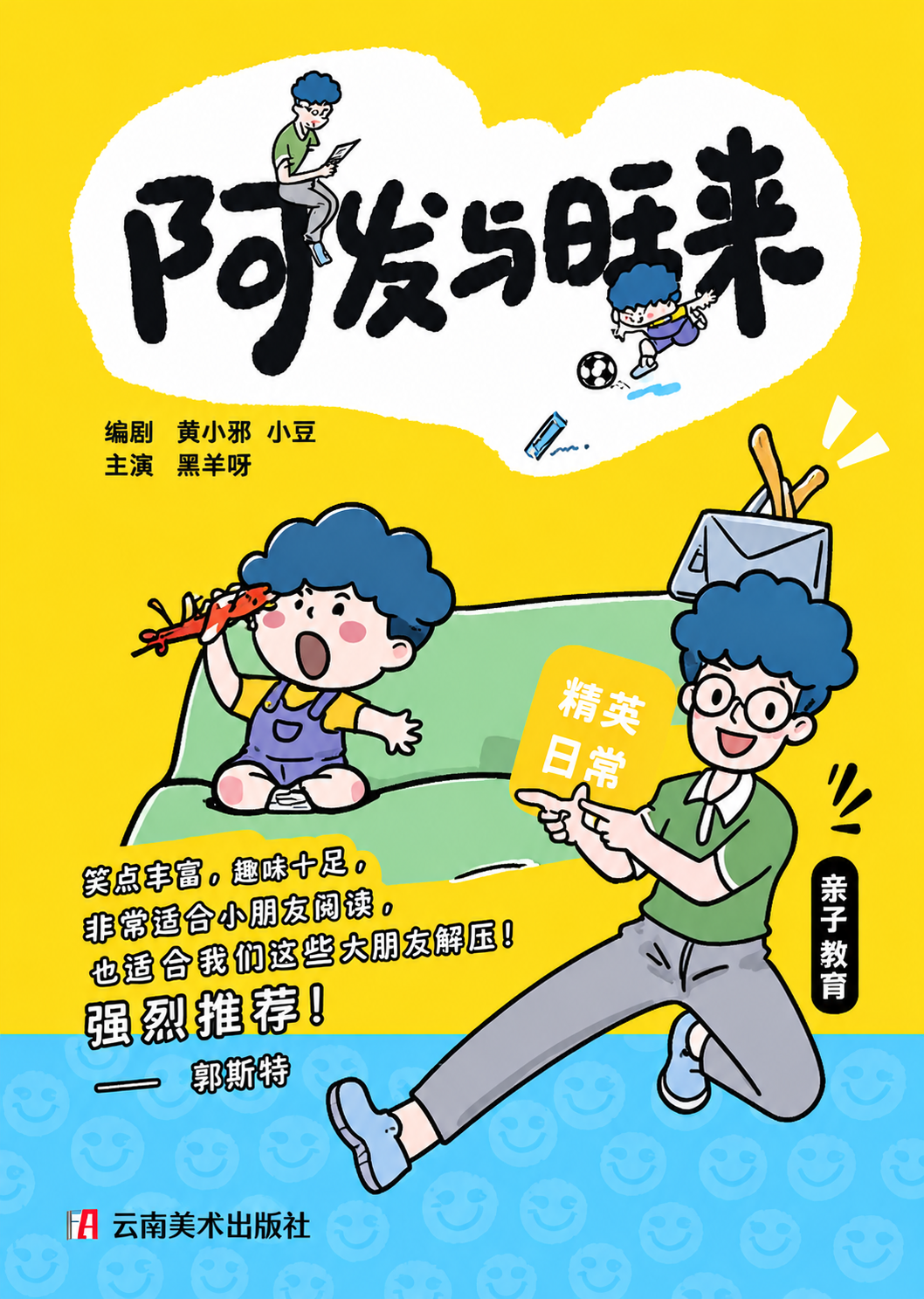
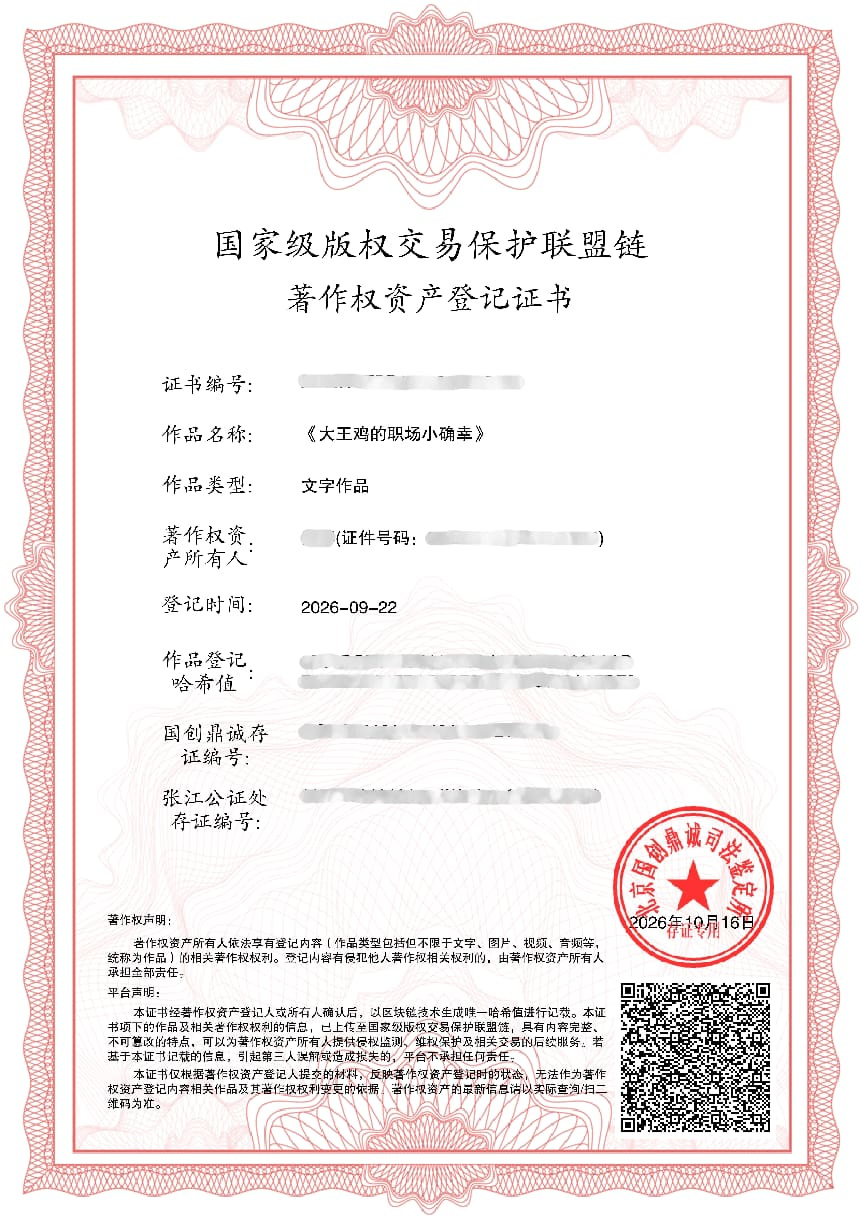
近日,职场漫画《大王鸡的职场小确幸》正式获得国家级版权交易保护联盟链著作权资产登记证书及版权存证证书。这一纸证书的意义,远不止于一次常规的版权确权——它意味着这部以“打工人日常”为底色的作品,其原创性与内容价值获得了国家级数字文化产权基础设施的认可,也为这部治愈系漫画添上了一层权威注脚。
一只小鸡,凭什么让人对号入座
《大王鸡的职场小确幸》的主角是一只头顶呆毛的黄色小鸡,没有超能力,不拯救世界,唯一的特长是“活着”。它会加班、会摸鱼、会为房租发愁,会在周一早晨像“尸体”一样准时挪到工位,也会在下班后瘫在沙发上思考“这个班我是非上不可吗”?正是这种极致的“普通”,让读者在翻开的瞬间就认出了自己。
漫画由黄小邪编剧(黑羊呀参与主笔),目前连载至28话。单话篇幅精炼,画风简洁圆润,表情夸张传神,对时间碎片化的上班族极其友好。它不承诺升职加薪,也不贩卖焦虑,只是把那些“说出来矫情、憋着又难受”的瞬间,一格一格画给你看。
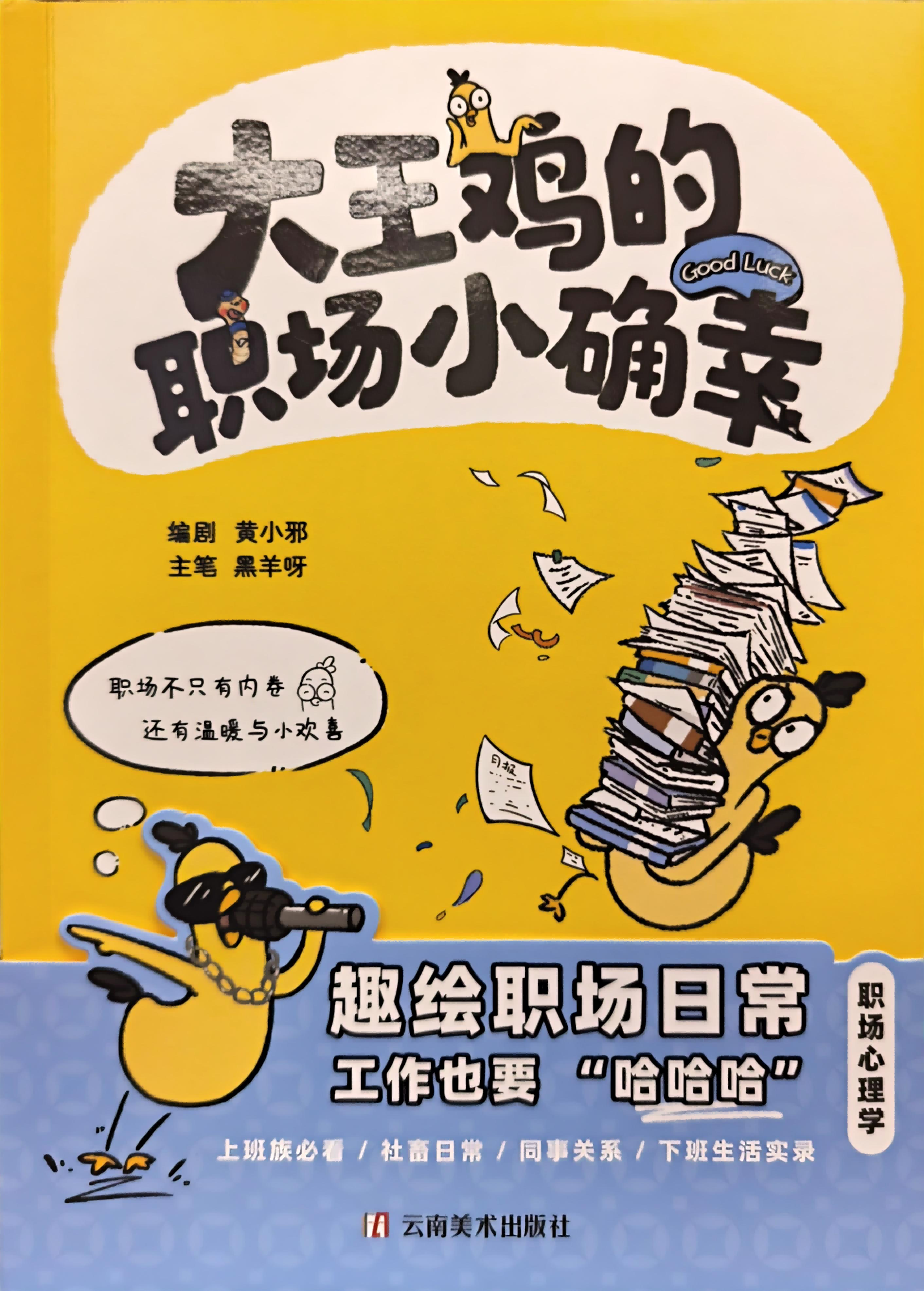
选题的准头,在于它专戳“说不出口”
这部漫画最擅长的,是把职场中那些微妙到近乎难以言说的心理活动,精准地拎出来示众。比如“是同事又是朋友,有问题真的很难提出”的为难:主角心里演练了无数遍,真到对方面前却一个字都蹦不出来,最后只好写了张纸条递过去。比如“请假羞耻”:明明发着烧,编辑框里的“请假半天”改来改去,最后怂成了“请假1小时”。再比如开会时的“假装认真艺术”,表面上点头如捣蒜,笔记本上却涂满了“公司原地爆炸”。
这些场景不惊天动地,却几乎人人都经历过。有读者在评论区写道:“作者是不是在我工位对面安了摄像头?”
丧而不怨,暖而不腻的分寸感
职场题材极易滑向两个极端:要么贩卖焦虑,把上班画成纯粹的受难;要么硬灌鸡汤,用虚假的正能量消解真实的疲惫。《大王鸡的职场小确幸》难得地拿捏住了中间那条窄路。它承认“工作不能财富自由,还是得吃土”的无奈,画“打工人省钱的一天”里为凑满减算破脑袋的心酸,却从不煽情、不抱怨,而是用幽默把委屈轻轻化解。
它也有黑色幽默的锋利时刻:深夜打车被司机问职业,面不改色答“总裁”,转头对着电话演“西城项目那十个亿到账了吗”;被大爷催婚,一句话终结话题:“大爷,我离异三次,有两个孩子。”这些桥段是打工人在无奈里长出的生存智慧,笑过之后,反而生出一丝“原来我不是一个人”的释然。
而它最动人的底色,藏在那些安静的瞬间里。被老板骂了,就默默地不发声,下班后却和小羊朋友喝酒吐槽,放话“大不了辞职”;加班到深夜回家,推开门喊一句“今天我又赚了一天的钱哦”,换来孩子一句“爸爸好棒”。全年请假零次、硬撑到优秀员工的大王鸡,在领奖台上小声说:“如果可以……我也想选择请假。”
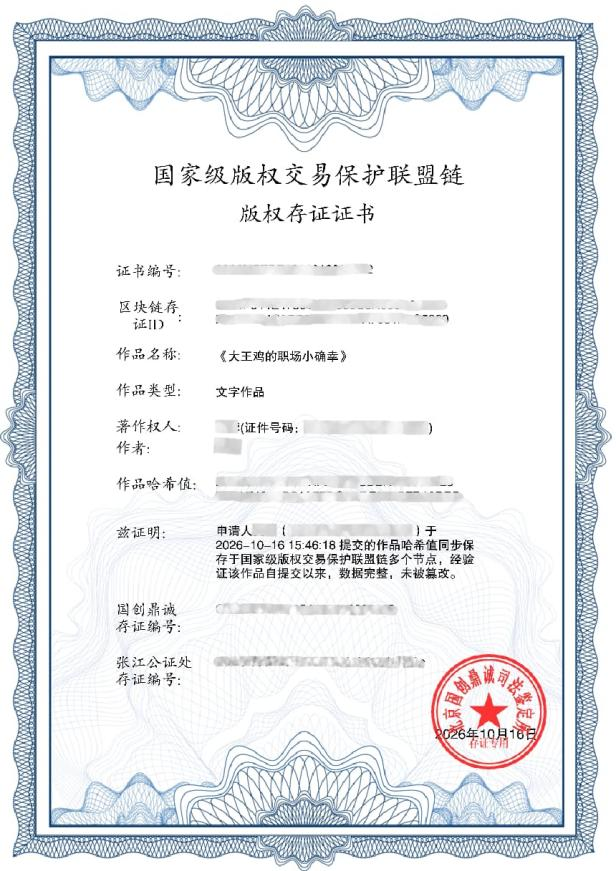
国家级版权存证背后,是对原创内容的制度性保护
此次获得的版权存证证书,依托的是国家级版权交易保护联盟链。该联盟链由新华网与上海文化产权交易所在国家有关部门指导下联合行业机构发起构建,为数字文创提供不可篡改、分布式、高可信的版权权属确认与维权服务,是贯彻落实国家文化数字化战略的重要基础设施 。对于一部以“小确幸”为名的漫画而言,这份“国家级”的认可,恰恰保护的是那份看似微小却珍贵的创作诚意——那些从真实职场褶皱里长出来的细节,值得被确权、被尊重、被保护。
如果你还没翻开过这本书,不妨从任意一话开始。它不会教你做人,也不会劝你“明天会更好”。它只是在你被闹钟拽起来、挤进地铁、在工位上坐够一整天的某个间隙里,让你偷偷笑出声。笑声一响,那口气就顺了。而解压,往往就是从这一声笑开始的。
Recently, the workplace-themed comic series *Little Joys in the Workplace of "Big King Chicken"* (大王鸡的职场小确幸) was officially granted a copyright asset registration certificate and a copyright deposit certificate by a national-level copyright trading and protection alliance blockchain. The significance of these certificates extends far beyond a routine act of copyright confirmation; it signifies that this work—centered on the daily lives of ordinary employees—has had its originality and content value recognized by a national-level digital cultural property infrastructure, while also providing an authoritative, high-profile endorsement for this heartwarming comic series.
Why would a little chick make people feel like they’re looking in a mirror?
The protagonist of *The Little Joys of "Big Boss" Chick in the Workplace* is a yellow chick with a tuft of hair sticking up on its head. It has no superpowers, doesn’t save the world, and its only real talent is simply "staying alive." It works overtime, slacks off, worries about rent, drags itself to its desk on Monday mornings like a "corpse," and collapses onto the sofa after get off work, wondering, "Do I really *have* to work this job?" It is precisely this extreme "ordinariness" that makes readers recognize themselves the moment they open the pages.
Written by Huang Xiaoxie (with art by Hei Yangya), the comic is currently 28 chapters in. Each installment is concise, featuring a clean, rounded art style and expressive, exaggerated facial features—perfect for office workers with only fragmented bits of free time. It makes no promises of promotions or pay raises, nor does it peddle anxiety; it simply captures—panel by panel—those moments that feel "too pretentious to voice, yet too painful to keep bottled up."
The brilliance of its premise lies in how it hits on the things people "can't bring themselves to say."
This comic excels at pinpointing those subtle, almost ineffable psychological states we experience in the workplace and bringing them out into the open. Take, for instance, the awkwardness of having a colleague who is also a friend—it becomes incredibly difficult to bring up a problem. The protagonist might rehearse the conversation countless times in their head, only to find themselves unable to utter a single word when face-to-face, eventually resorting to passing a handwritten note instead. Then there’s the "shame of asking for time off": even when running a fever, one might agonize over a leave request, repeatedly editing the duration until, lacking the courage to ask for a half-day, they settle for just one hour. Or consider the "art of feigning attentiveness" during meetings—nodding along vigorously while, in reality, the notebook is filled with scribbles imagining the entire company exploding into thin air.
While these scenarios aren't exactly earth-shattering, they are experiences almost everyone has had. One reader commented: "Did the author install a hidden camera at my desk?"
A delicate balance: weary but not resentful, heartwarming but not cloying
Workplace-themed content often veers toward one of two extremes: either peddling anxiety—portraying the daily grind as nothing more than pure suffering—or force-feeding "chicken soup for the soul," using hollow positivity to gloss over genuine exhaustion. *Little Joys in the Workplace* (by "Big King Chicken") manages to strike a rare, precise balance. It acknowledges the harsh reality—that a job won't lead to financial freedom, and you might still end up "eating dirt" (living on a shoestring budget)—and depicts the bittersweet struggle of trying to maximize discounts while pinching pennies. Yet, it never descends into melodrama or bitter complaining; instead, it uses humor to gently dissolve any sense of grievance.
It also features moments of sharp, dark humor: when a late-night taxi driver asks about his profession, he replies—without batting an eye—that he’s a "CEO," then immediately pivots to a phone call, feigning a serious conversation: "Has the one billion for the West City project come through yet?" When an elderly man presses him about getting married, he shuts down the conversation with a single line: "Sir, I’ve been divorced three times and have two kids." These bits of wit are survival strategies that working people develop out of sheer necessity; they elicit a laugh, followed by a sense of relief—a realization that, "I’m not alone in this."
Yet, the most poignant aspects of the story are tucked away in its quieter moments. After being scolded by his boss, he stays silent—only to vent over drinks with his friend, Little Sheep, declaring, "Worst case scenario, I’ll just quit!" Returning home late after overtime, he pushes open the door and calls out, "I earned some money again today!"—to which his child replies, "You’re the best, Dad!" And then there’s "Big King Chicken"—who never took a single day of leave all year and pushed himself to the point of being named "Employee of the Year"—whispering from the awards podium: "If I could... I think I’d actually choose to take some time off."
National-Level Copyright Registration: Institutional Protection for Original Content
The copyright registration certificate obtained here is backed by a national-level copyright trading and protection consortium blockchain. Initiated by Xinhuanet and the Shanghai Cultural Property Exchange—under the guidance of relevant national authorities and in collaboration with industry organizations—this blockchain provides immutable, distributed, and highly trustworthy services for confirming copyright ownership and enforcing rights for digital cultural and creative works. It serves as a vital piece of infrastructure for implementing the national strategy for the digitalization of culture. For a comic series centered on the theme of "small, certain happiness" (*xiao que xing*), this "national-level" recognition safeguards something that may seem minor, yet is profoundly precious: the sincerity behind the creation. The details—drawn from the nuanced, often overlooked corners of real-world professional life—deserve to be formally recognized, respected, and protected.
If you haven’t opened this book yet, feel free to start with any chapter. It won’t lecture you on how to live, nor will it offer platitudes about how "tomorrow will be better." Instead, in those fleeting moments—perhaps after being jolted awake by an alarm, squeezed into a crowded subway, or spending a long, weary day at your desk—it might just make you chuckle out loud. Once that laughter escapes, the tension eases. And often, that very first laugh is where the process of de-stressing begins.
近日,職場漫畫《大王雞的職場小確幸》正式取得國家級版權交易保護聯盟鏈著作權資產登記證書及版權存證證書。這張紙證書的意義,遠不止於一次常規的版權確權——它意味著這部以“打工人日常”為底色的作品,其原創性與內容價值獲得了國家級數位文化產權基礎設施的認可,也為這部治癒系漫畫添上了一層權威註腳。
一隻小雞,憑什麼讓人對號入座
《大王雞的職場小確幸》的主角是一隻頭頂呆毛的黃色小雞,沒有超能力,不拯救世界,唯一的特長是“活著”。它會加班、會摸魚、會為房租發愁,會在周一早晨像“屍體”一樣準時挪到工位,也會在下班後癱在沙發上思考“這個班我是非上不可嗎”?正是這種極致的“普通”,讓讀者在翻開的瞬間就認出了自己。
漫畫由黃小邪編劇(黑羊呀參與主筆),目前連載至28話。單話篇幅精煉,畫風簡潔圓潤,表情誇張傳神,對時間碎片化的上班族極為友善。它不承諾升職加薪,也不販賣焦慮,只是把那些“說出來矯情、憋著又難受”的瞬間,一格一格畫給你看。
選題的準頭,在於它專戳“說不出口”
這部漫畫最擅長的,是把職場中那些微妙到近乎難以言說的心理活動,精準地拎出來示眾。例如“是同事又是朋友,有問題真的很難提出”的為難:主角心裡演練了無數遍,真到對方面前卻一個字都蹦不出來,最後只好寫了張紙條遞過去。例如“請假羞恥”:明明發著燒,編輯框裡的“請假半天”改來改去,最後慫成了“請假1小時”。再例如開會時的“假裝認真藝術”,表面上點頭如搗蒜,筆記本上卻塗滿了“公司原地爆炸”。
這些場景不驚天動地,卻幾乎人人都經歷過。有讀者在留言區寫道:“作者是不是在我工位對面安了攝影機? ”
喪而不怨,暖而不膩的分寸感
職場主題極易滑向兩個極端:要麼販賣焦慮,把上班畫成純粹的受難;要麼硬灌雞湯,用虛假的正能量消解真實的疲憊。 《大王雞的職場小確幸》難得地拿捏住了中間那條窄路。它承認“工作不能財富自由,還是得吃土”的無奈,畫“打工人省錢的一天”裡為湊滿減算破腦袋的心酸,卻從不煽情、不抱怨,而是用幽默把委屈輕輕化解。
它也有黑色幽默的鋒利時刻:深夜打車被司機問職業,面不改色答“總裁”,轉頭對著電話演“西城項目那十個億到賬了嗎”;被大爺催婚,一句話終結大話題:“個億到賬了嗎”;被大爺催婚,一句話終結大話題:“ ”這些橋段是打工人在無奈里長出的生存智慧,笑過之後,反而生出一絲“原來我不是一個人”的釋然。
而它最動人的底色,藏在那些安靜的瞬間裡。被老闆罵了,就默默地不發聲,下班後卻和小羊朋友喝酒吐槽,放話“大不了辭職”;加班到深夜回家,推開門喊一句“今天我又賺了一天的錢哦”,換來孩子一句“爸爸好棒”爸爸。全年請假零次、硬撐到優秀員工的大王雞,在領獎台上小聲說:“如果可以……我也想選擇請假。 ”
國家級版權存證背後,是對原創內容的製度性保護
這次取得的版權存證證書,依託的是國家級版權交易保護聯盟鏈。該聯盟鏈由新華網與上海文化產權交易所在國家有關部門指導下聯合行業機構發起構建,為數位文創提供不可篡改、分佈式、高可信的版權權屬確認與維權服務,是貫徹落實國家文化數字化戰略的重要基礎設施 。對於一部以“小確幸”為名的漫畫而言,這份“國家級”的認可,恰恰保護的是那份看似微小卻珍貴的創作誠意——那些從真實職場褶皺裡長出來的細節,值得被確權、被尊重、被保護。
如果你還沒翻開過這本書,不妨從任何一話開始。它不會教你做人,也不會勸你“明天會更好”。它只是在你被鬧鐘拉起來、擠進地鐵、在工位上坐夠一整天的某個間隙裡,讓你偷偷笑出聲。笑聲一響,那口氣就順了。而解壓,往往就是從這一聲笑開始的。